

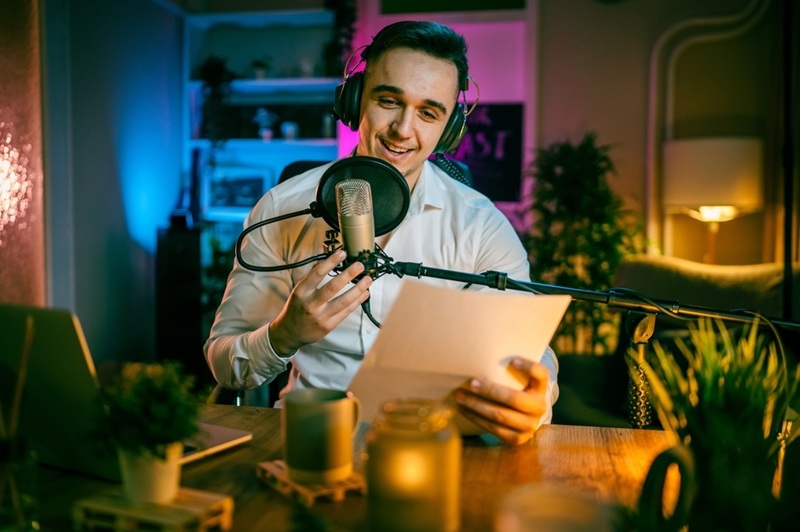
Many people search for how to start a podcast because they want to build something of their own. They look for practical answers, not theory. Some want to know how to start a podcast for free, while others keep asking, 'How does a beginner start a podcast?'
This guide will explain to you everything about how to start a podcast with no audience.
Must Read: A Comprehensive Guide on Property Management Accounting
Podcasts are easy to consume. That is the first reason. A person can listen while driving, cleaning, or walking outside. There is no need to stop daily life to learn something new.
The second reason is connection. When someone speaks regularly on a topic, listeners begin to recognize the voice. Over time, that voice feels familiar. Not dramatic. Just consistent.
Podcasts also allow space for detailed discussion. Unlike short content formats, episodes do not need to rush. A topic can unfold naturally. Sometimes slowly. That pace builds understanding.
There is also a variety. Business insights, personal growth advice, health discussions, career planning, and daily habits. Listeners choose what fits their stage in life. And here is something simple but important. Podcasts feel real. They are not overly polished. Small pauses and natural speech patterns make them human. That authenticity keeps people coming back.
Top Pick: Learn How to Build a Future Ready Financial Strategy in 2025
You can refer to the list below to find the factors that you need to consider about how to start a podcast for free:
Consistency builds trust. Each episode should follow a simple structure. A short introduction. A focused discussion. A closing summary. When listeners know what to expect, they stay longer. Structure also makes recording easier for the host. There is less confusion and fewer pauses.
Waiting for motivation rarely works. A fixed recording schedule works better. Choose one day each week. Prepare the outline and start recording the video. You can then edit the footage and publish it. Routine removes overthinking. And consistency builds progress quietly.
Many beginners try to sound perfect. That usually creates pressure. Instead, focus on being helpful. Speak clearly. Share useful ideas. Keep explanations direct. Listeners are not searching for perfection. They are searching for clarity.
You can check the following list of steps to understand how a beginner starts a podcast:
Every podcast needs a reason to exist. That reason must be clear to the host before it becomes clear to listeners. Your episodes should have a defined purpose that keeps the content aligned with the key idea.
Starting with at least five planned topics removes early stress. Each outline can include key points in the form of examples and closing thoughts. There should be nothing complex and everything should have a clear structure.
The first recording may feel uncomfortable. This is normal. You should listen back to it again after the recording is done. Identify the unclear sections and rectify them. This review process can help you build your skills faster.
Editing is not about removing personality. It is about improving clarity. Cut long pauses. Remove repeated words. Keep the message sharp. Clear audio respects the listener’s time.
Overthinking can delay your growth. Therefore, once the episode is ready, you should publish it. You do not always have to focus on perfection because progress is the most important thing.
The following list will help you understand how podcasters get paid in 2026:
As audience engagement grows, businesses may request promotional mentions. These are brief and placed naturally within episodes. Sponsors look for loyal listeners. Not just numbers. Engagement matters more.
Some listeners choose to support creators directly. This happens when the content provides real value. Trust drives this model. Without trust, support remains low.
A podcast can act as a platform to promote personal expertise. Coaching, consulting, or training services can be introduced naturally. The podcast builds authority over time. And authority opens doors.
Hosts may recommend relevant tools or services in the form of affiliate links. When listeners take action, the host may earn a commission. This method works only when recommendations are honest and aligned with the audience’s needs.
You can check the following steps to learn how to start a podcast with no audience:
Instead of thinking about hundreds of people, imagine one person listening carefully. This approach keeps the tone natural. It prevents forced energy. And it builds genuine connection. Growth begins with depth and not just with volume.
Even without followers, high-quality content should be shared. This can be done in the form of short summaries and key insights with complete clarity. This consistency can increase visibility slowly.
You should seek feedback from the audience. Ask questions at the end of episodes. Even a small audience can respond. Those responses shape improvement. Interaction builds community, even at an early stage.
Do not try to upgrade everything at once. Improve sound clarity and structure to make sure the delivery is top-notch. Small refinements create noticeable change over months. This steady improvement builds confidence. And confidence shows in the voice.
You must understand that how to start a podcast is not about gaining fame and earning money quickly. It is about focusing on creating valuable and exciting content consistently for the viewers. A large audience is not required to begin. Growth can become visible with steady effort and patience.
The episode should be long enough to explain the topic clearly. It should avoid filler content and stay focused on value.
Yes. Basic recording and simple editing are enough to begin. Skills improve with practice.
Income depends on audience trust and consistency. It usually develops gradually rather than immediately.
Both things matter because consistency builds long-term growth. Quality improves naturally over time.
Yes. A focused and loyal audience often creates stronger results than large but inactive numbers.
This content was created by AI