


Modern financial markets are undergoing a massive transformation toward decentralized credit access. Understanding peer-to-peer lending allows individuals and business owners to bypass rigid banking institutions entirely. Financial market reports indicate that global P2P lending transaction volumes exceeded 100 billion dollars recently. This remarkable growth demonstrates how technology reshapes borrowing and investing habits worldwide.
Securing a fair loan or finding decent investment yields often feels incredibly frustrating. You deserve a transparent financial ecosystem that respects your time, lowers fees, and rewards your trust.
In this detailed article, we examine what peer-to-peer lending is, evaluate P2P lending platforms, analyze benefits for investors and borrowers, and address key risks involved.
Peer-to-peer lending is a direct financial mechanism that connects individual borrowers with willing investors through online digital platforms. Instead of relying on a traditional bank to underwrite and fund a loan, P2P lending platforms act as automated intermediaries. Borrowers gain access to personal or business financing, while investors earn attractive interest yields by funding those individual loan notes directly.
The operational framework behind P2P loans relies on streamlined digital processes to match borrowers with investors efficiently.
Step 1: Borrower Application Submission:
Borrowers submit an online application detailing their required loan amount, loan purpose, and personal financial documentation.
Step 2: Credit Assessment and Risk Grading:
Advanced platform underwriting tools evaluate the credit score, income verification, and existing debt ratio to assign a specific risk grade and interest rate.
Step 3: Investor Funding and Capital Allocation:
The verified loan listing goes live on the platform marketplace, where retail and institutional investors fund portions of the total loan request.
Step 4: Disbursement and Automated Repayments:
Once fully funded, the platform disburses capital to the borrower while collecting fixed monthly repayments and distributing principal and interest back to investors.
Must Try: 6 Red Flags You Must Know About Alternative Lending Risks
Borrowers choose online lending portals over traditional bank branches for several compelling reasons.
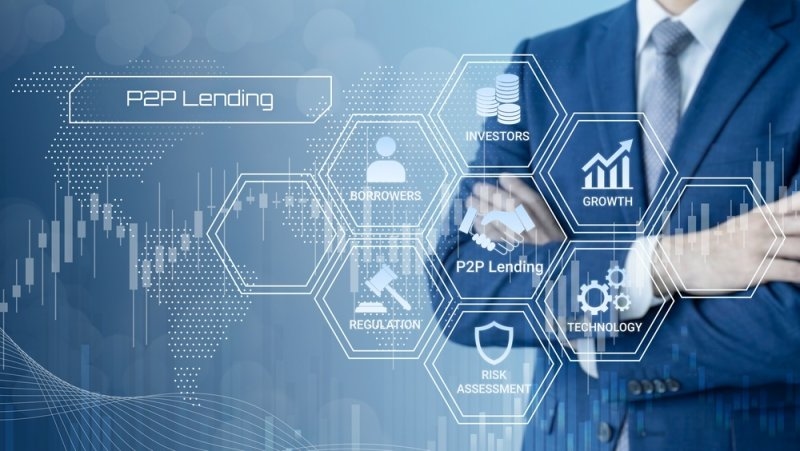
Individual retail investors gain access to fixed income asset classes previously reserved for institutional funds.
Every financial product carries inherent trade-offs that require careful evaluation.
| Risk Category | Impact on Borrowers | Impact on Investors |
| Credit Default Risk | Potential credit score damage and collection actions | Direct loss of invested principal capital |
| Liquidity Constraints | Fixed monthly repayment obligations until term ends | Money locked in a loan note until final maturity |
| Platform Operational Risk | Changing loan servicing provider or terms | Service disruptions if the platform ceases operations |
Understanding what are the risks of P2P lending helps participants build resilient financial strategies. Unsecured credit loans lack government deposit insurance backing, making credit risk management critical for long-term success.
Essential Reads: Phantom Income Tax Traps & Smart Fixes That Can Save You Big
Selecting established P2P lending platforms requires reviewing historical default rates, regulatory compliance, and platform fees. Premium portals provide detailed historical underwriting data and clear secondary market liquidity options. Assessing platform track records protects your hard-earned capital effectively.
Decentralized financial technology continues to reshape how capital flows between individuals and businesses. Throughout this article, we explored what peer-to-peer lending is and how it connects creditworthy borrowers directly with yield-seeking investors. We reviewed the complete step-by-step loan process, highlighted key advantages like lower borrowing costs and steady investor cash flow, and examined operational risks, including credit defaults and liquidity limits.
We also discussed how evaluating platform transparency helps participants make informed decisions. Adopting modern financial tools empowers you to take control of your financial growth while avoiding costly traditional banking friction.
Building a secure financial future requires leverage built on smart choices and transparent tools. Take charge of your wealth journey today by exploring innovative financing strategies, optimizing your capital management, and finding flexible solutions tailored to your unique goals. Discover expert guidance and comprehensive corporate resources by visiting companysecret.com now.
Interest earnings generated through peer-to-peer platforms count as standard taxable income in most jurisdictions. Investors must report annual interest earnings on their tax filings. Platform operators typically provide downloadable annual tax statements summarizing total interest received and any qualified default losses incurred.
Most top marketplace lending platforms require a minimum fair credit score around 600 to qualify for loan listings. Higher credit scores unlock significantly lower interest rates and reduced origination fees, while lower scores may require additional income verification steps.
Yes, reputable lending marketplaces operate under strict oversight from consumer protection and securities regulators. Regulatory frameworks enforce fair lending disclosures, anti-money laundering checks, capital reserve requirements, and transparent investor reporting standards across all registered operating platforms.
The vast majority of leading online marketplace lenders allow borrowers to pay off loan balances early without charging prepayment penalties. Early payoffs reduce total interest expenses significantly, making these structures highly attractive for rapid debt payoff plans.
Regulated marketplace platforms use independent third-party backup servicers to manage ongoing loan collections if the main company fails. Borrowers must continue making scheduled monthly payments, and collected funds continue flowing to investors according to original loan agreements.
This content was created by AI